A number changed overnight and nobody can say why. The morning refresh failed again, and the report was already in inboxes when someone noticed. Those are pipeline problems, and this page is about the discipline that fixes them: data engineering keeps the data underneath every dashboard, forecast and AI feature accurate, observable and cheap to run. It is unglamorous work, which is exactly why doing it well is a competitive advantage.
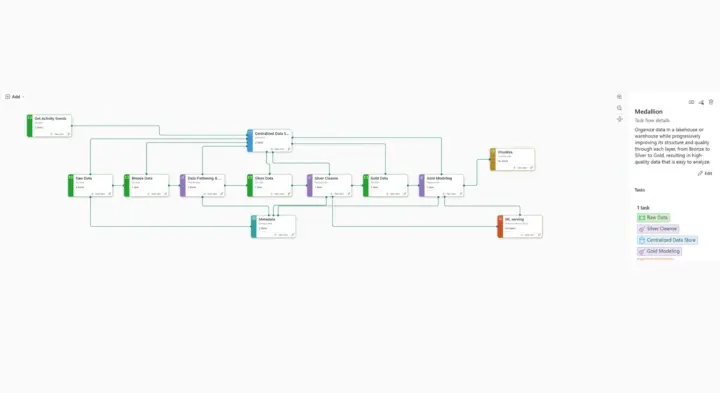
Our builds follow the medallion pattern on Microsoft Fabric or Azure Databricks: raw data lands in bronze, gets cleaned and conformed in silver, and is served as governed gold datasets with data contracts between the layers. Where the workload calls for streaming, we use Fabric Real-Time Intelligence or Spark Structured Streaming, credentials we hold as a Real-Time Intelligence Featured Partner.
We treat pipelines as software. Everything lives in source control, deploys through CI/CD, carries automated quality tests, and reports its own health through observability tooling. When something breaks at source, the alert fires before the business opens the report, not after.
A large share of our engineering work is modernisation rather than greenfield: retiring SSIS packages, hand-coded stored procedures and ageing ADF pipelines in favour of metadata-driven ELT, at whatever pace the estate can absorb. Mount Anvil's Fabric lakehouse migration cut report delivery times by 40% within three months.