Businesses are collecting more data than ever, but many still struggle to turn it into clear, useful decisions.
This is exactly why Microsoft Fabric is getting so much attention. Companies don’t just need data anymore; they need connected, intelligent, real-time data platforms.
That’s where Microsoft Fabric comes in.
At FabCon 2026, Microsoft made it clear: the future of data platforms isn’t just storage or dashboards, it’s AI-powered decision systems. With over 30,000+ customers and rapid adoption, Fabric is quickly becoming a central piece in modern data strategy.
The big shift?
Fabric is evolving from a data platform into a business intelligence engine that thinks, learns, and acts.
What is FabCon?
FabCon 2026 is Microsoft’s annual conference focused on Microsoft Fabric, data, AI, and analytics. It’s where Microsoft announces its biggest platform updates, shares product direction, and shows how businesses can use new features in real-world scenarios.
For organisations using data to make decisions, FabCon gives an early view of what’s changing and what it means in practice.
What is Microsoft Fabric?
Microsoft Fabric is an all-in-one data and analytics platform that unifies data storage, integration, analytics, and AI in a single environment.
In simple terms, it brings everything, data lakes, warehouses, dashboards, and AI tools into one place.
Instead of juggling multiple systems, businesses can connect, analyse, and act on data seamlessly within Fabric.
FabCon 2026 Key Highlights: What Businesses Need to Know
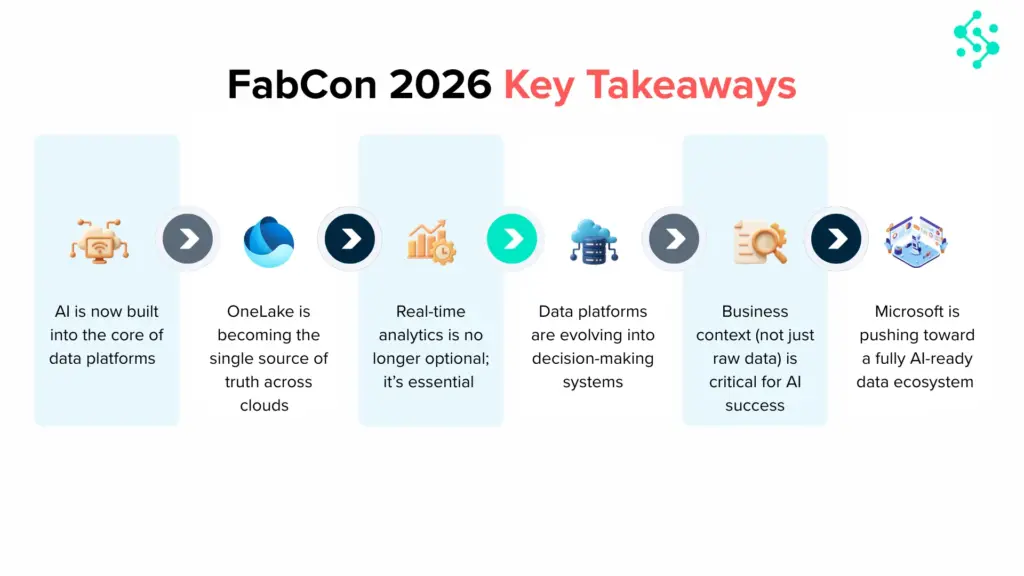
“At FabCon 2026, Microsoft shared several key highlights that show where modern data platforms are heading next.” The biggest FabCon 2026 highlights were not just feature releases. They showed a clear shift in how businesses will work with data over the next few years.
Microsoft is moving beyond dashboards and reports. The focus is now on connected data, AI-ready infrastructure, and systems that help teams make faster decisions without relying on technical specialists. They are:
- AI is now built into the core of data platforms
- OneLake is becoming the single source of truth across clouds
- Real-time analytics is no longer optional; it’s essential
- Data platforms are evolving into decision-making systems
- Business context (not just raw data) is critical for AI success
- Microsoft is pushing toward a fully AI-ready data ecosystem
Major Updates from FabCon 2026
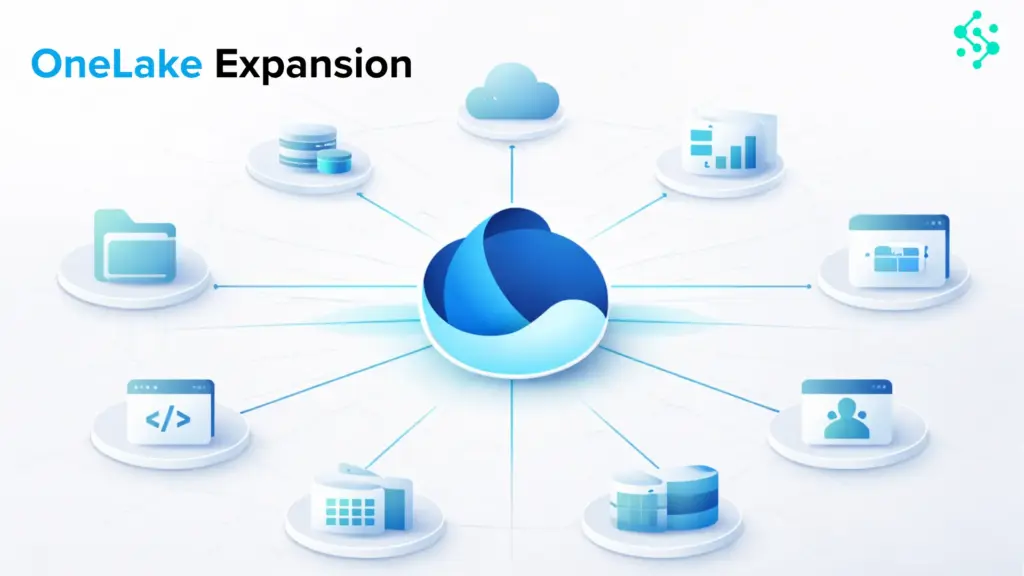
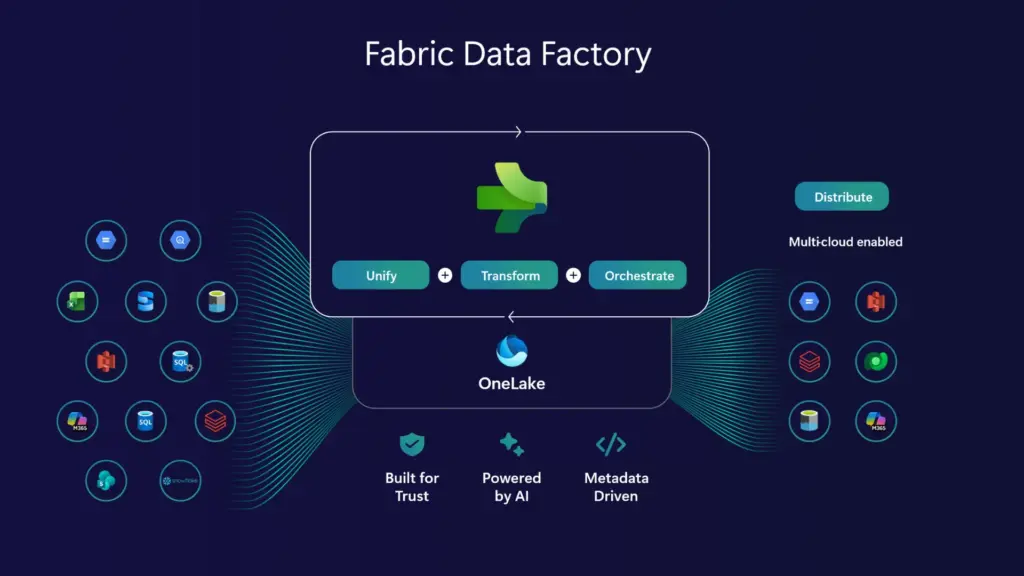
OneLake Expansion
What it is:
A unified data lake that connects all your data across systems and clouds.
What changed in 2026:
- Zero-copy data integration (no need to move data)
- New connectors for platforms like SAP, Oracle, and Snowflake
- Automatic data transformation (e.g., Excel to analytics-ready formats)
Why it matters:
No more data silos. Businesses can access all their data in one place faster, cheaper, and without duplication.
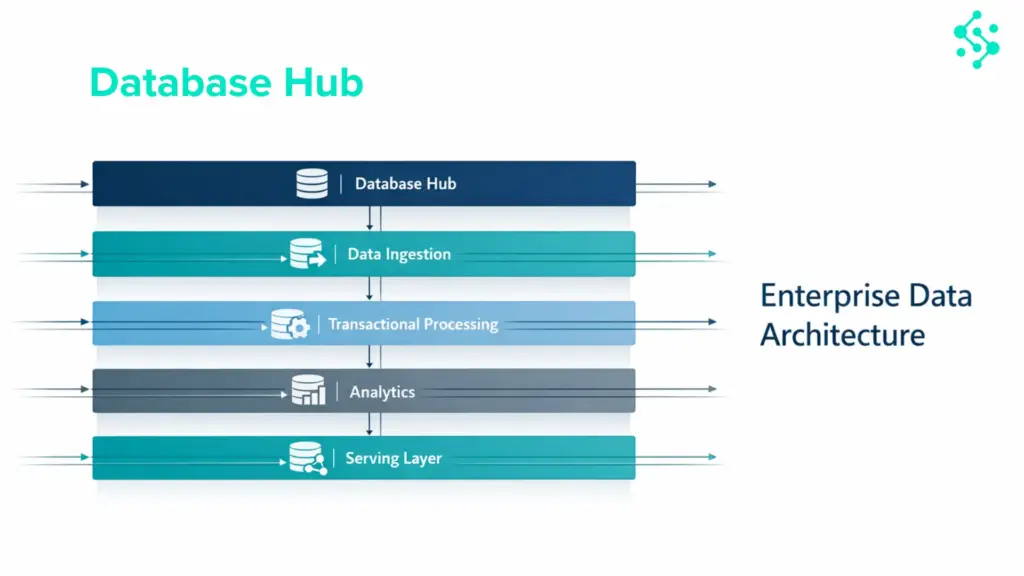
Database Hub
What it is:
A centralised interface to manage all databases (cloud and on-premises).
What changed in 2026:
- Unified monitoring across SQL, Oracle, and other systems
- Centralised governance and security
- Integration with hybrid and multi-cloud environments
Why it matters:
Teams get a single view of all data systems, reducing complexity and improving control.
Fabric IQ
What it is:
A semantic layer that defines business terms and data relationships.
What changed in 2026:
- Introduction of business “ontology” (shared definitions)
- Integration with AI tools and analytics
- Early support for planning and forecasting
Why it matters:
AI becomes smarter. Instead of guessing, it understands what “revenue” or “customer” actually means.
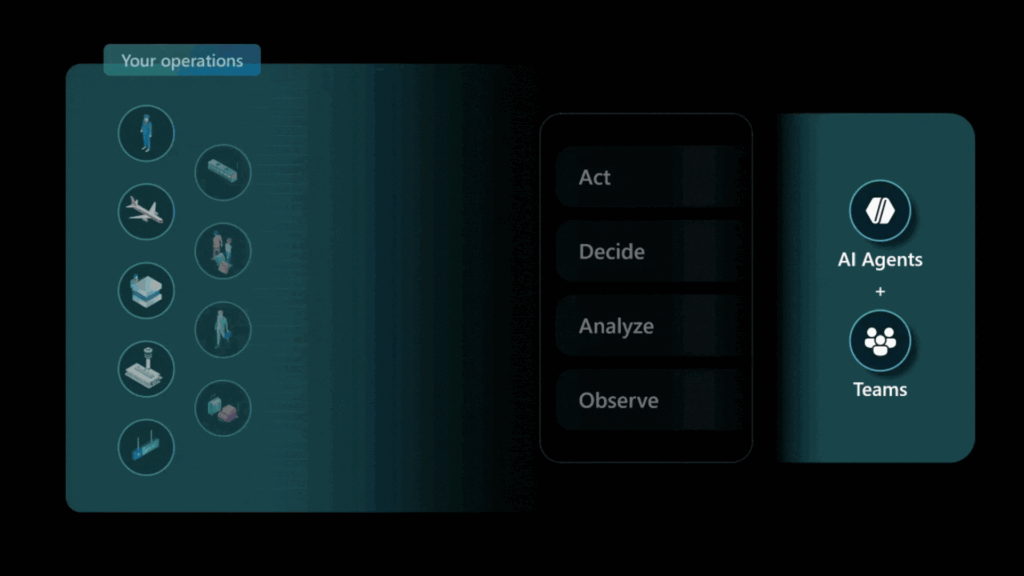
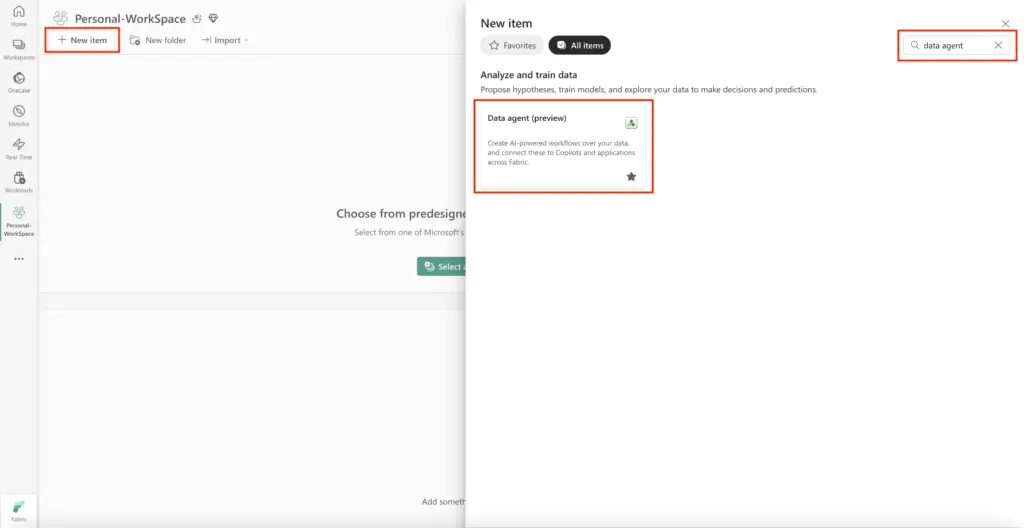
Fabric Data Agents
What it is:
AI-powered assistants that interact with your data.
What changed in 2026:
- Now generally available (GA)
- Natural language queries (ask questions in plain English)
- Proactive alerts and insights
Why it matters:
Anyone in the business, not just analysts, can get insights instantly.
Real-Time Analytics Enhancements
What it is:
Tools for analysing live, streaming data.
What changed in 2026:
- Built-in geospatial maps
- Automatic anomaly detection
- Faster integration with dashboards
Why it matters:
Businesses can act in the moment, not after the fact.
What These Updates Mean for Businesses?
These updates aren’t just technical; they change how businesses operate.
- Decision-making gets faster. With real-time data and AI agents, leaders don’t have to wait days for reports. Insights are available instantly
- Data becomes accessible to everyone. Non-technical teams can ask questions and get answers without relying on IT or analysts.
- AI becomes practical. Instead of experimental tools, Fabric embeds AI directly into daily workflows, making it useful, not just impressive.
- Cost and complexity drop. With OneLake and unified tools, businesses reduce duplication, manual pipelines, and system overhead.
Finally, companies move toward a new model:
From data-driven to intelligence-driven organisations
That’s a big leap, and Fabric is positioning itself right at the centre of it.
Should You Invest in Microsoft Fabric in 2026?
When it makes sense:
- You’re dealing with multiple data sources or silos
- You want to adopt AI in business operations
- You need real-time insights
- You’re already using Microsoft tools (Azure, Power BI, etc.)
When it might not:
- Your data needs are very small or simple
- You’re heavily invested in another platform with no integration plans
- You lack an internal data strategy or governance
Bottom line:
Microsoft Fabric in 2026 is ideal for growing, data-driven organisations ready for AI.
How Fabric Compares to Other Data Platforms?
Many businesses also compare Microsoft Fabric with platforms like Snowflake and Databricks.
The biggest difference is that Fabric brings data engineering, analytics, reporting, and AI into one Microsoft-native platform. That makes it easier for organisations already using Power BI, Azure, and Microsoft 365.
For a deeper comparison:
Microsoft Fabric vs Databricks
Wrapping It All Up
FabCon 2026 made one thing crystal clear:
Data platforms are no longer passive systems; they’re becoming active intelligence layers.
With innovations like OneLake, Fabric IQ, and Data Agents, Microsoft Fabric is shaping a future where businesses can:
- Unify all their data
- Understand it with context
- Act on it in real time
And honestly, that’s exactly what modern businesses need.
Ready to turn your data into real business value?
FabCon 2026 made one thing clear: Microsoft Fabric is moving fast, but most organisations are still figuring out how to actually use it.
The challenge isn’t understanding the features. It’s knowing what they mean for your business, and where to start.
That’s exactly where Synapx helps.
Through our partnership with Microsoft, many organisations can access a fully funded $25,000 Data & AI Assessment. It’s designed to give you a clear view of your current setup, where the gaps are, and what a practical next step looks like, without any cost or commitment.
If you’re exploring Fabric, Copilot, or your broader data strategy, it’s a simple way to get clarity before making bigger decisions. Speak to one of our Data & AI specialists and see what this could look like for your organisation.