

Choosing the right data platform is not just a technical decision anymore. It affects how quickly teams can access insights, how well data is governed, how much you spend, and how easily your business can scale AI in the future.
For many organisations, the choice often comes down to two leading platforms: Microsoft Fabric and Databricks.
Both are strong platforms. Both support data engineering, analytics, machine learning, and reporting. But they are built with different priorities in mind.
The real question is not which one is better overall. It is which one fits your business better.
This guide compares Microsoft Fabric and Databricks in a practical way, looking at cost, governance, Microsoft alignment, team fit, and where each platform delivers the most value.
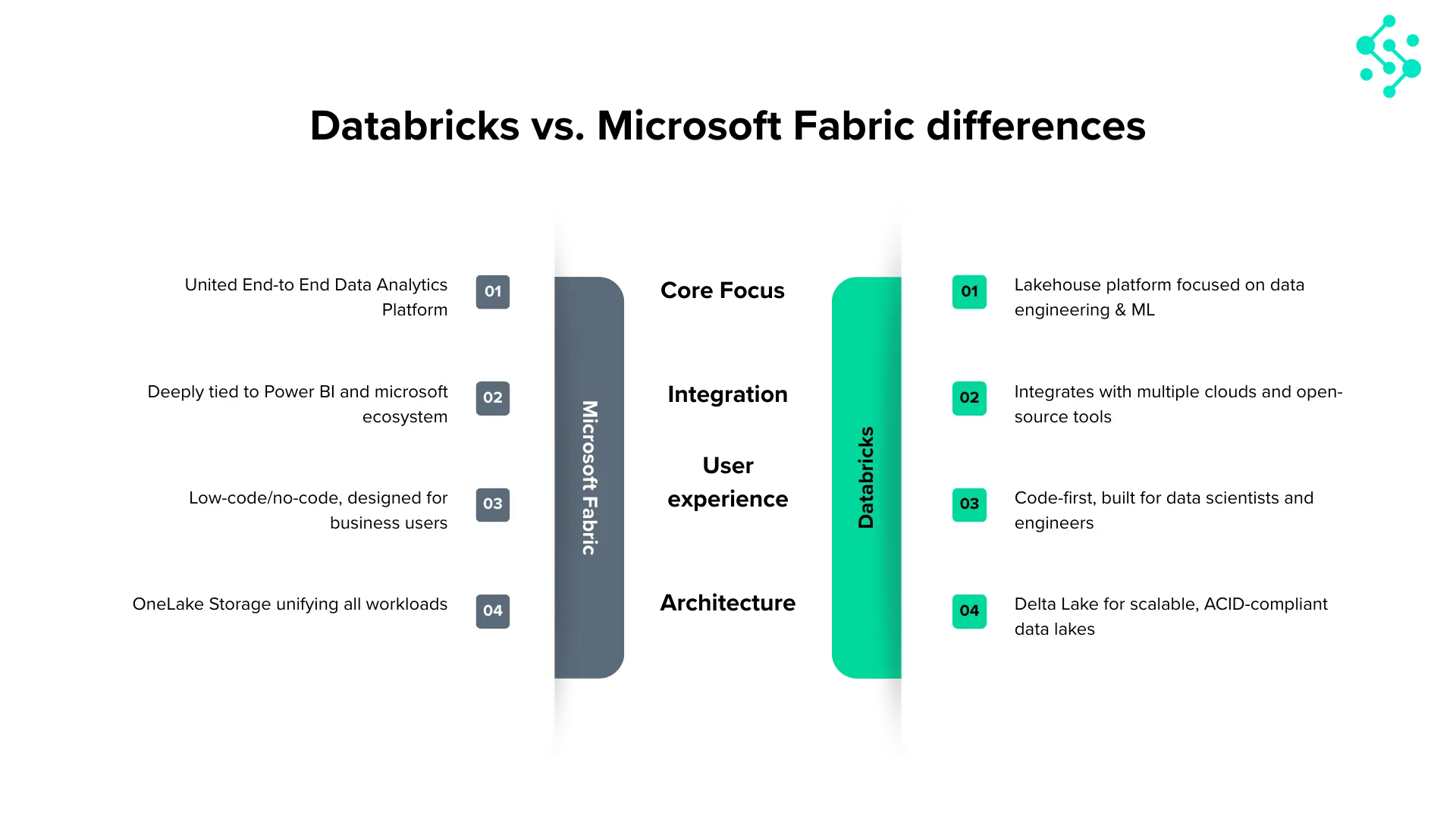
Microsoft Fabric vs Databricks: Quick Comparison
| Criteria | Microsoft Fabric | Databricks |
|---|---|---|
| Best for | Microsoft-first businesses | Advanced data / AI teams |
| Deployment | SaaS, fully managed | More flexible, more technical |
| Data storage | OneLake | Delta Lake |
| BI / reporting | Native Power BI integration | Usually third-party BI |
| AI / ML | Strong, integrated with Microsoft AI | Best-in-class for advanced ML |
| Governance | Easier for business-wide control | More configurable, more setup |
| Cost model | Capacity-based | Usage / DBU-based |
| Team fit | Business + IT collaboration | Data engineers / data scientists |
| Ecosystem | Deep Microsoft integration | Open / multi-cloud |
For most businesses already using Microsoft tools, Fabric is often the easier and faster route. For organisations with complex AI or multi-cloud needs, Databricks may offer more flexibility.
The Biggest Difference: Simplicity vs Flexibility
The biggest difference between Microsoft Fabric and Databricks is how they are designed to be used.
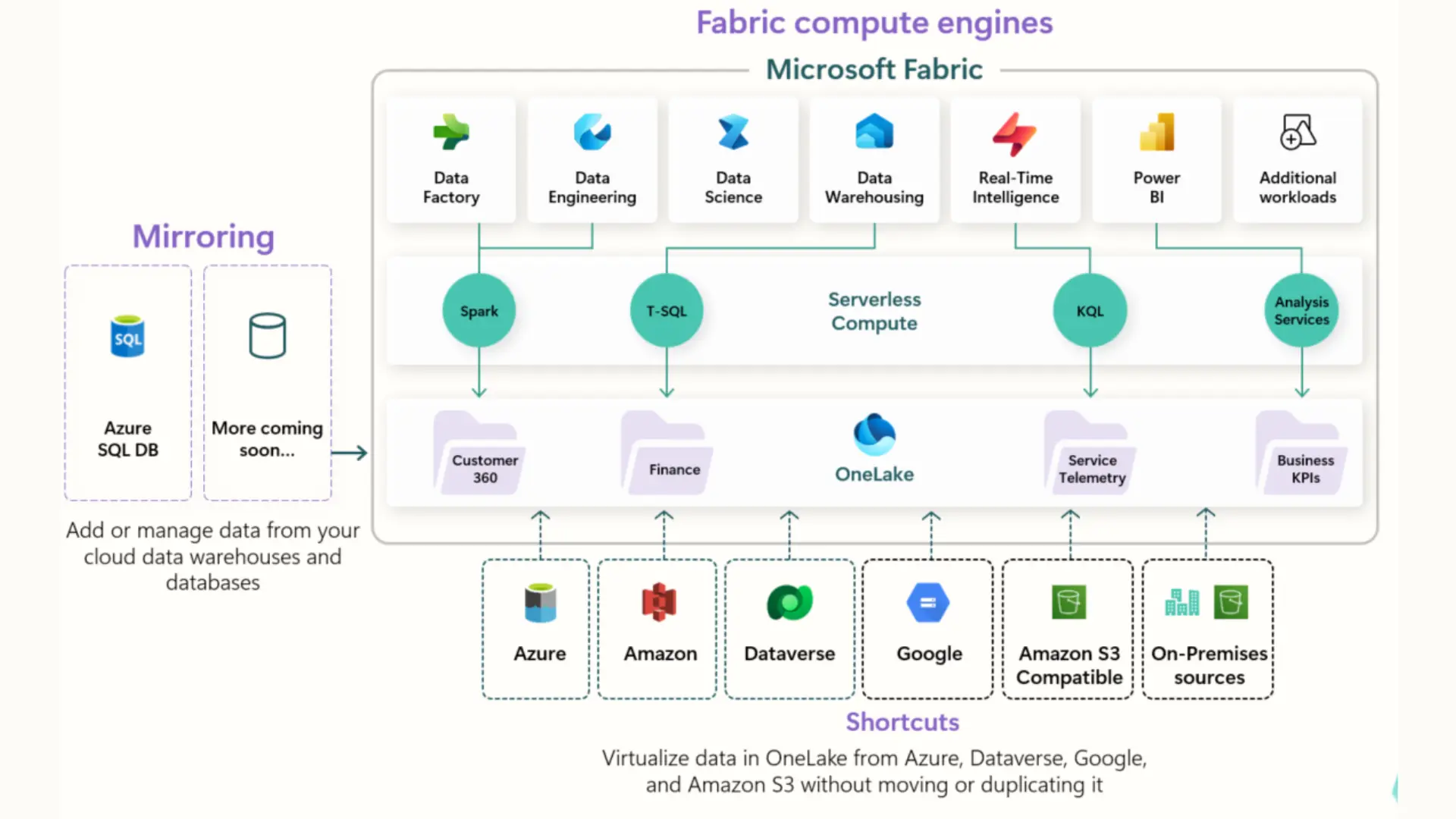
Fabric is built to simplify analytics.
It brings data engineering, warehousing, reporting, real-time analytics, and machine learning into one managed platform. Everything sits around OneLake, which acts as a central data layer. For businesses that want fewer moving parts and faster time to value, this is a major advantage.
Databricks is built for flexibility.
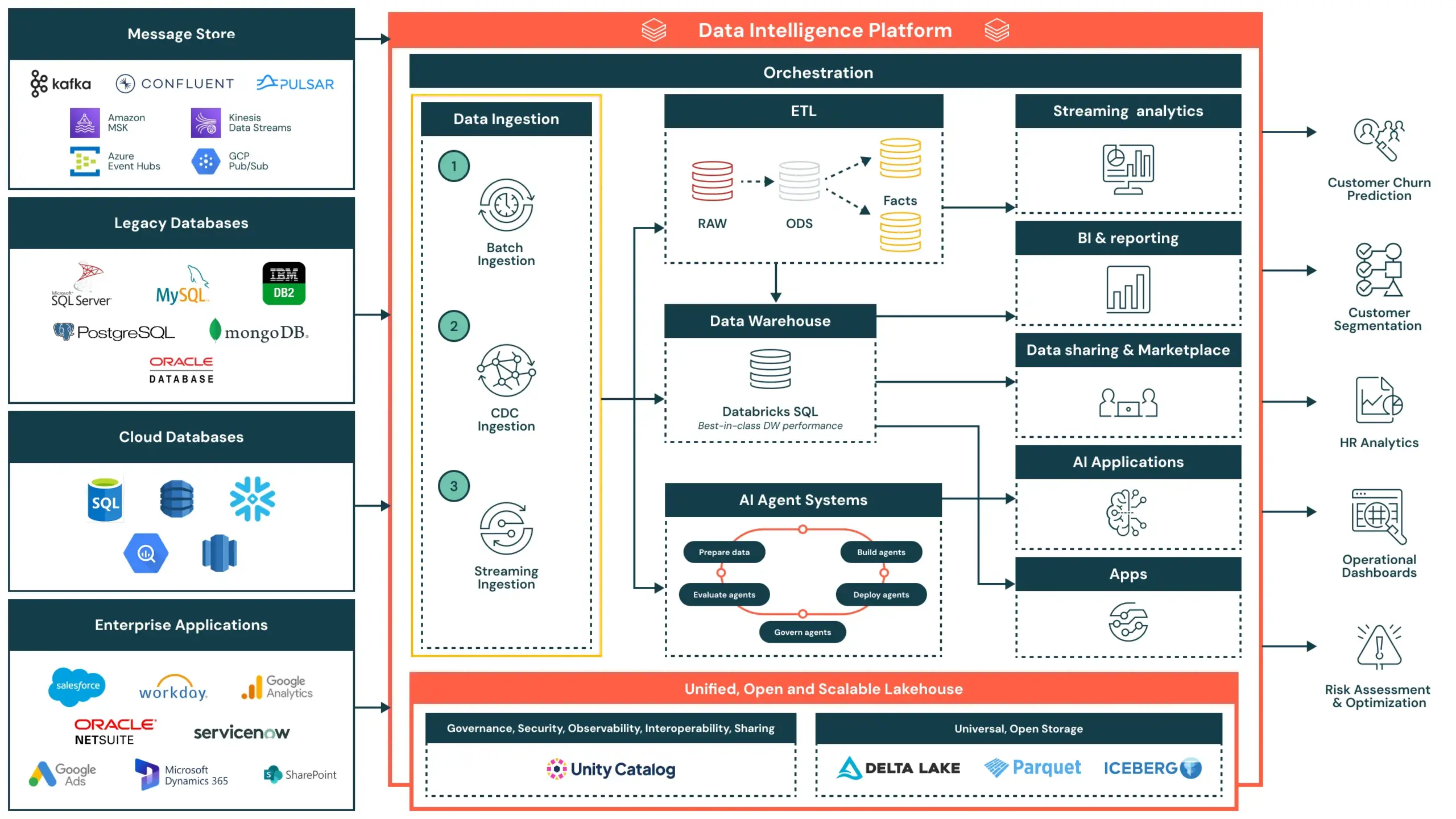
It gives teams more control over architecture, tooling, and infrastructure. It is especially strong for businesses with experienced engineering teams, large-scale data pipelines, or advanced AI use cases.
In simple terms:
- Fabric is easier to adopt and manage
- Databricks gives more control and depth
The right choice depends on how much complexity your team can realistically support.
Which Platform Is Better for Cost and Day-to-Day Management?
Cost is one of the biggest decision factors, but pricing is not just about licence fees.
It is also about:
- setup effort
- governance overhead
- training needs
- long-term support
Microsoft Fabric
Microsoft Fabric uses a capacity-based pricing model. Businesses pay for Fabric capacity units that support workloads across engineering, warehousing, reporting, and analytics.
The benefit is simplicity.
For Microsoft customers already using:
- Microsoft Power BI
- Microsoft Azure
- Microsoft 365
Fabric often reduces tool sprawl and lowers operational friction.
It is also easier for teams without deep platform expertise.
Databricks
Databricks uses a usage-based model built around DBUs.
This can be cost-effective for the right workloads, but costs can become harder to predict if environments are not well managed.
Databricks also often requires:
- more engineering ownership
- more setup and optimisation
- stronger internal technical capability
For advanced teams, that flexibility is valuable. For many mid-sized businesses, it can create more overhead than expected.
Which Platform Is Better for Microsoft Businesses?
This is where Microsoft Fabric has a clear advantage.
For businesses already invested in Microsoft tools, Microsoft Fabric fits naturally into the wider ecosystem.
That includes:
- Microsoft Power BI for reporting
- Microsoft Power Platform for workflows
- Microsoft Azure for infrastructure
- Microsoft 365 for collaboration
This matters because data platforms do not work in isolation.
Businesses often struggle not because they lack tools, but because their tools do not work well together.
Fabric reduces that friction by keeping analytics, reporting, governance, and AI within one environment.
Databricks can also work well on Azure, but it usually requires more integration work to create the same joined-up experience.
Which Platform Is Better for AI and Advanced Data Use Cases?
Both platforms support AI and machine learning. But they are suited to different levels of maturity.
Choose Microsoft Fabric if:
- your teams need reporting and analytics quickly
- business users need better access to data
- you want simpler governance
- your business already uses Microsoft
Fabric is especially strong for:
- unified reporting
- operational analytics
- Power BI modernisation
- easier business adoption
Choose Databricks if:
- you have large-scale AI / ML projects
- you need deep engineering control
- you want multi-cloud flexibility
- your team already works heavily with Spark
Databricks remains stronger for:
- complex ML pipelines
- custom AI models
- large-scale data science workloads
The key is to choose based on business need, not platform hype
Governance, Security, and Long-Term Scalability
A platform may look powerful on paper, but governance is what determines whether it works in practice.
For many businesses, this is where platform choice matters most.
Microsoft Fabric makes governance easier because it is built as a managed SaaS platform. Security, permissions, reporting access, and compliance are easier to manage inside a Microsoft environment.
This can be especially valuable for:
- regulated businesses
- growing teams
- organisations with mixed technical skill levels
Databricks gives more control, but that also means more responsibility.
For businesses with mature engineering teams, this may be ideal.
For others, it can create unnecessary complexity.
So, Which Should You Choose?
There is no universal winner.
But for most businesses already using Microsoft, Microsoft Fabric will usually offer:
- faster implementation
- simpler governance
- easier reporting
- lower operational complexity
Databricks is often the better fit for:
- advanced AI programmes
- large engineering teams
- highly custom data environments
The best choice depends on:
- your current Microsoft setup
- your internal technical capability
- your reporting needs
- your long-term AI plans
The goal is not to choose the most powerful platform.
It is to choose the platform your business will actually use well.
Key Takeaways
- Microsoft Fabric: A unified, end-to-end analytics platform deeply integrated with the Microsoft ecosystem, ideal for organizations prioritizing simplicity, collaboration, and Power BI integration.
- Databricks: An open, cloud-agnostic lakehouse platform excelling in AI/ML, advanced data engineering, and offering maximum flexibility for complex data architectures.
- Architecture: Fabric is SaaS-first and Azure-centric with OneLake; Databricks is cloud-agnostic, built on Delta Lake, and runs on your cloud infrastructure.
- Use Cases: Fabric is strong for democratizing analytics and seamless BI. Databricks is a leader for cutting-edge AI/ML and large-scale data processing.
- Future Trends: Expect deeper AI integration, enhanced lakehouse capabilities, and a continued focus on governance from both platforms.
- Decision Factor: The best choice depends on your organization’s existing tech stack, strategic goals, and need for flexibility vs. integration.
Need Help Choosing Between Microsoft Fabric and Databricks?
Choosing the right data platform can save years of complexity later.
Synapx helps businesses assess their current setup, reporting challenges, governance needs, and AI goals to choose the right platform with confidence.
Whether you are modernising analytics, moving from legacy reporting, or planning for AI, the right platform decision matters.
Get a tailored recommendation based on your current setup, goals, and data maturity, contact us today!