
Dynamics 365 Automation: How Midwich Reduced Manual Work Across Order Processing, Procurement, and Pricing
The client approached us to solve the operational strain left by a complex Dynamics 365 ERP rollout, with a focus on reducing manual effort and creating a more practical path to automation across the business. The goal was to improve the speed, consistency, and scalability of key processes such as order processing, procurement, and pricing, while giving the organisation a clearer and more actionable route into AI for operations. We delivered a targeted automation programme using Microsoft Power Platform, AI-enabled workflow design, data integration, and supporting technologies to help Midwich modernise operations without introducing further complexity.
Case StudyClient
MidwichIndustry
IT Services and IT ConsultingCountry
United KingdomServices
ai, data, Power Automate, Power Apps, Microsoft Power Platform£900K
Total savings
157%
ROI
<6 months
Payback period

The Challenge
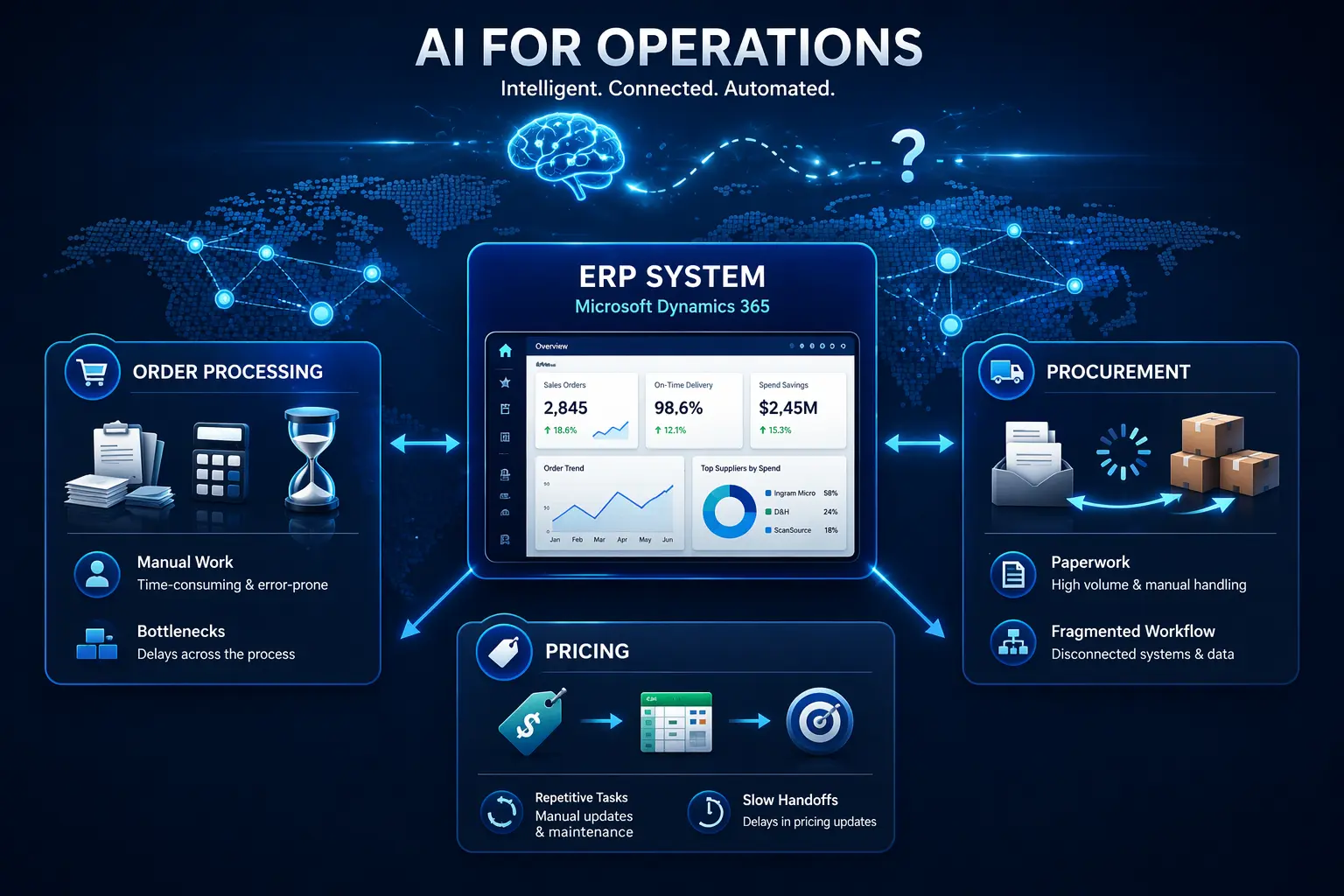
Midwich, a global business operating across 25 countries, was dealing with the aftermath of a difficult Dynamics 365 ERP implementation. While the programme aimed to create a more centralised operating model, it also introduced rigidity, added complexity, and left several operational inefficiencies unresolved.
Critical processes, including order management, procurement, and pricing, still depended heavily on manual work. This made it harder for teams to move quickly, maintain consistency, and scale efficiently. The business was effectively trying to manage modern operational demands through constrained ERP processes rather than flexible automation.
At the same time, there was growing leadership interest in AI for operations. But like many organisations, Midwich lacked a clear, practical roadmap for applying AI in a way that would deliver measurable value. The opportunity was clear; the execution path was not.
This created a clear need for a different approach: one that focused on solving real business problems, reducing manual effort, and improving agility without adding another layer of complexity.
Our Solution
Synapx was introduced through a trusted partner and took a business-first approach from day one. Rather than leading with technology, the focus was on understanding Midwich’s operational pain points and identifying where automation could create immediate, practical value.
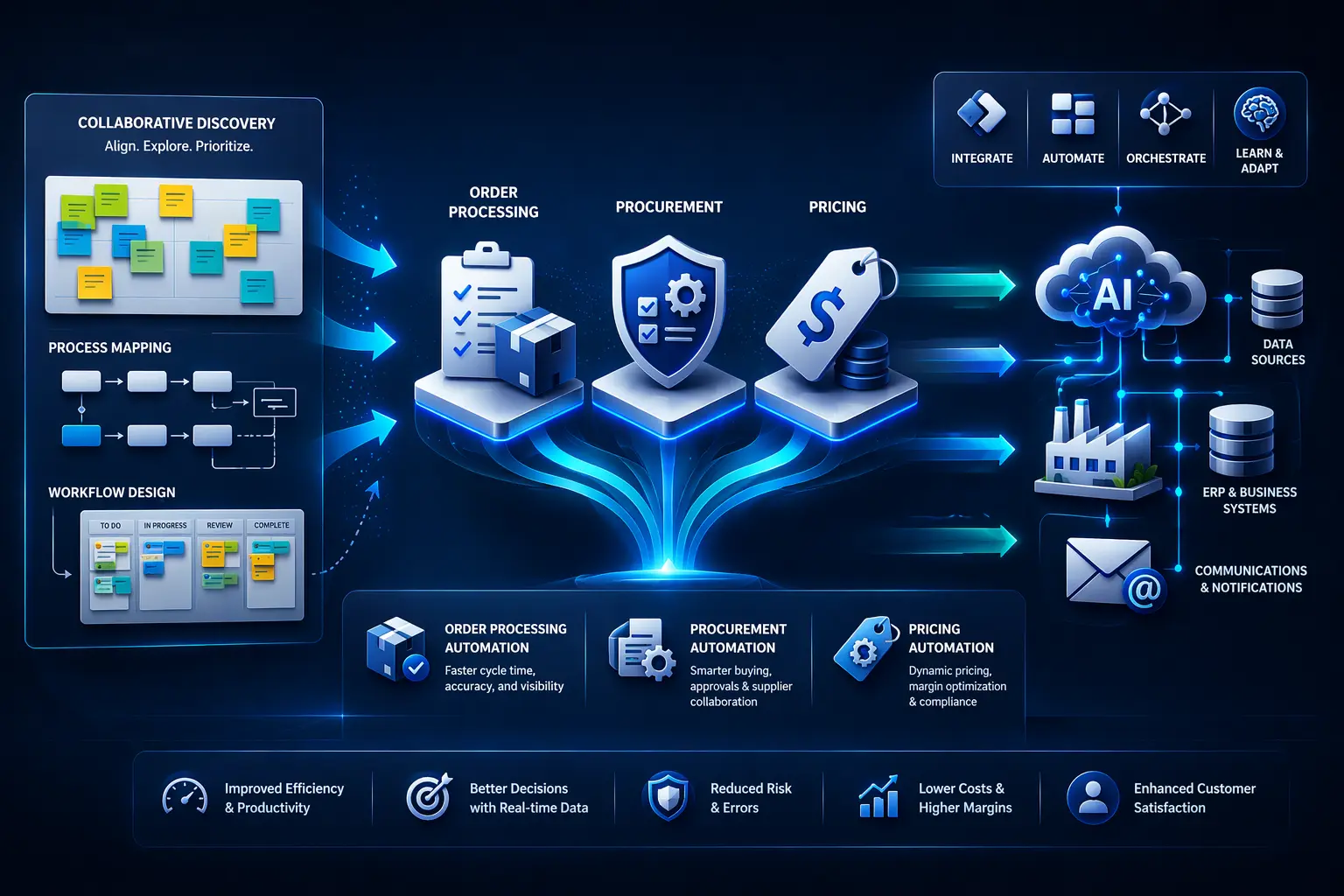
Through a series of collaborative workshops, five potential use cases were identified and assessed. These were then prioritised into three high-impact solutions, forming the foundation of an internal transformation initiative called Slipstream.
The first solution focused on order processing automation. By reducing manual handling and introducing intelligent workflows, Midwich was able to improve speed, accuracy, and scalability in a process that had become a major operational bottleneck.
The second solution addressed procurement automation through the development of an internal web-based platform. Designed to function as a streamlined procurement hub, it made purchasing easier for employees while improving visibility and control outside the limits of rigid ERP workflows.
The third solution focused on pricing automation. Synapx developed a tailored system capable of managing complex pricing structures with greater transparency, control, and consistency across the organisation.
These solutions were delivered using a modern Microsoft stack including Power Platform, Azure AI Foundry, Azure Data Factory, SQL infrastructure, and Outlook integrations. This gave Midwich a more flexible foundation for business process improvement while ensuring the technology remained aligned to operational need. As the programme matured, the approach also became increasingly technology-agnostic, supporting better long-term fit and scalability.
Beyond solution delivery, Synapx also helped Midwich build internal capability. This included supporting hiring decisions, advising on team structure, and enabling the business to take greater ownership of its evolving technology landscape. The relationship developed into a close working partnership built on shared accountability and continuous collaboration.
The Result
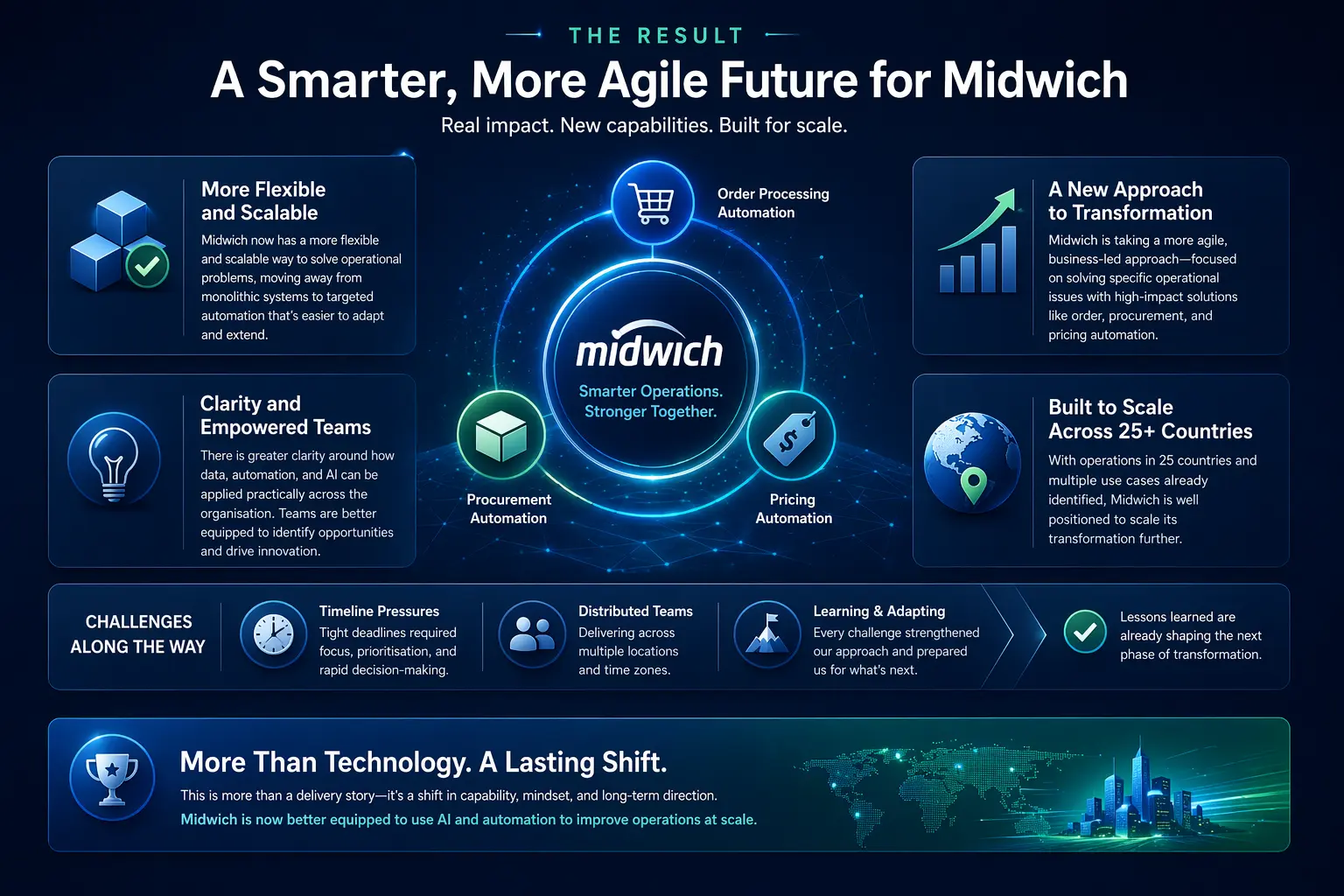
Although the Slipstream initiative is still nearing full completion, the impact is already visible. Midwich now has a more flexible and scalable way to solve operational problems, shifting away from dependence on large monolithic systems toward targeted automation that is easier to adapt and extend.
There is now greater clarity around how data, automation, and AI can be applied in practical ways across the organisation. Internal teams are better equipped to spot improvement opportunities and take a more active role in driving innovation.
Just as importantly, Midwich has changed how it approaches transformation. Instead of defaulting to large-scale system change, the business is now taking a more agile and business-led view, focused on solving specific operational issues with high-impact solutions such as order processing automation, procurement automation, and pricing automation.
With operations spanning 25 countries and additional use cases already identified, Midwich is well positioned to scale its transformation further. The work completed to date has created both a technology foundation and the internal confidence needed to expand automation more strategically over time.
There were challenges along the way, including timeline pressures and the realities of delivery across distributed teams. But those lessons are already informing the next phase of work and strengthening how future initiatives will be delivered.
Ultimately, this Power Platform case study is about more than technology delivery. It reflects a shift in capability, mindset, and long-term direction, with Midwich better equipped to use AI and automation to improve operations at scale.
“What stood out about Synapx was their business-first approach. After a difficult ERP project, we needed a partner who understood the real problems we were trying to solve rather than arriving with a pre-defined solution.
They’ve worked closely with our team, helped us build internal capability, and brought a level of partnership that never felt transactional. Their ability to combine strategic thinking with practical delivery made a real difference to how the programme progressed.
Even before full completion, it’s clear the way we’re approaching automation, data, and AI now is far more effective than before. Synapx genuinely care about the outcome, challenge our thinking in the right way, and have been a trusted partner throughout.”
Joe Thompson
Other Case Studies
At Synapx, we’re proud to show how our solutions have transformed the way our clients work and operate. Below you can see our latest client project.
Dynamics 365 Automation: How Midwich Reduced Manual Work Across Order Processing, Procurement, and Pricing
The client approached us to solve the operational strain left by a complex Dynamics 365 ERP rollout, with a focus on reducing manual effort and creating a more practical path to...
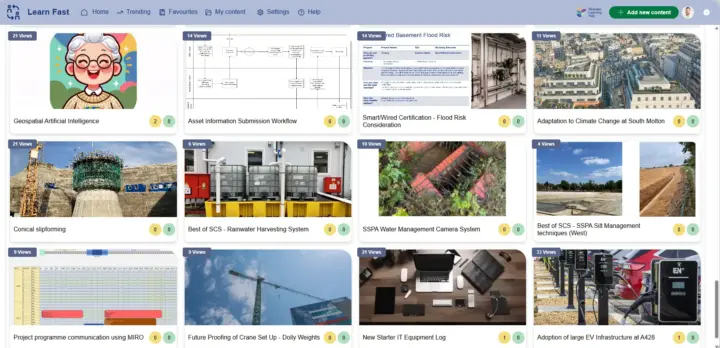
Learn Fast - Share Knowledge, Scale Adoption
Centralised Subscriber Data Integration with Power Automate
The client approached Synapx for support with the Power Platform through a time-and-materials engagement. The project focused on centralising subscriber data management and streamlining processes. This involved integrating three distinct mailing list forms into a unified database to enable efficient...

Migrating Power BI to Fabric Lakehouse with Medallion Architecture
The client approached us to automate their material transfer processes between internal and external sites. The project aimed to centralise operations and improve efficiency by replacing their manual methods with an automated system for real-time tracking. We delivered the solution...

Power BI Reporting & Power Apps AVC Calculator
The client approached Synapx to provide Power Platform support under a time-and-materials engagement. The project aimed to enhance data analytics and streamline business processes through Power BI implementation and creation of an AV Calculator from Excel to Power Apps,...

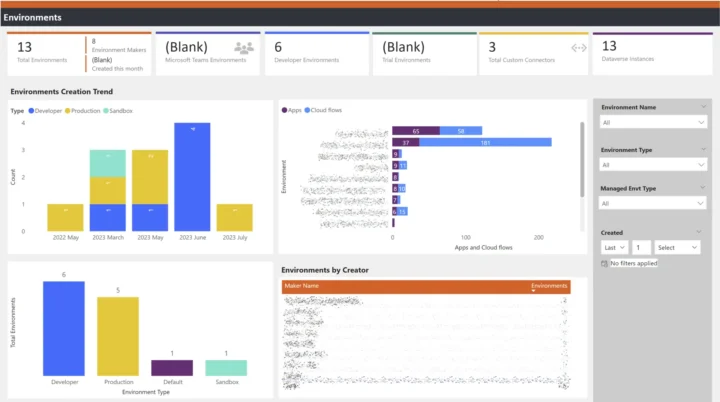
Power Platform Center of Excellence Implementation - Power BI
The client approached us in order to implement a reporting system to provide oversight on the implementation of power-platform within their organisation.
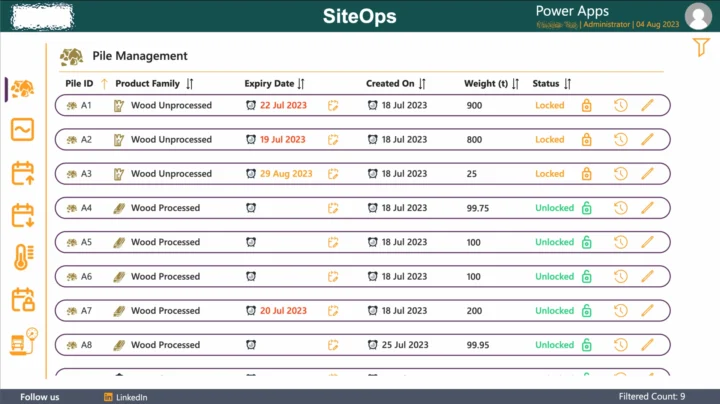
Material Management Application with Business Central Automation - Power Apps with Power Automate
The client approached us needing a system to automate their processes for managing the transfer of different materials held in piles between their internal and external sites.
Policies and Procedures - Power Apps with SharePoint Documents Library
The client wanted an application to effectively manage their companies policies and procedures from within a SharePoint documents library.

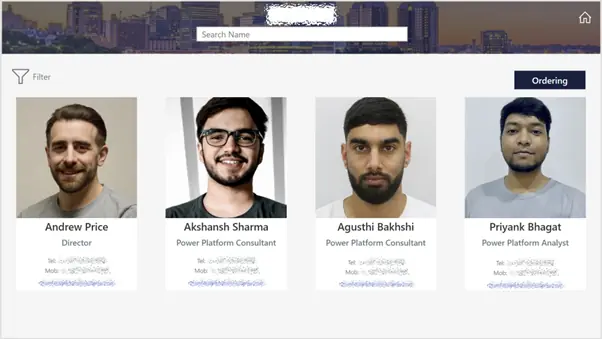
Personnel Directory - Power Apps
The client wanted a directory within their SharePoint site to display all their staff members, and provided key contact details such as their phone number and email address.
Book A Free Discovery Session
Schedule a FREE call with our power platform specialists.
Book a Discovery Session