
The world of data analytics and data science is in a constant state of evolution, with new platforms and technologies emerging to help organisations unlock the full potential of their data. Two titans in this space, Microsoft Fabric and Databricks, have captured significant attention, each offering a comprehensive suite of tools for data engineering, data warehousing, data science, and business intelligence. As we look towards 2026, the question isn’t just which platform is superior, but rather which platform is the better fit for your specific organisational needs and strategic goals.
A recent Gartner report highlighted that by 2027, “more than 50% of organisations will adopt a composable data and analytics strategy, breaking down monolithic platforms to leverage best-of-breed solutions.” This trend underscores the importance of understanding the nuances of platforms like Microsoft Fabric and Databricks, as they represent different approaches to composability and integration within the broader data ecosystem.
This blog will dive deep into a comparative analysis of Microsoft Fabric and Databricks, examining their core functionalities, architectural differences, pricing models, integration capabilities, and the evolving landscape that will shape their adoption in 2026.
Understanding the Core Philosophies
At their heart, Microsoft Fabric and Databricks, while both aiming to unify data experiences, stem from slightly different origins and philosophies.
Microsoft Fabric: The Unified, Integrated Experience
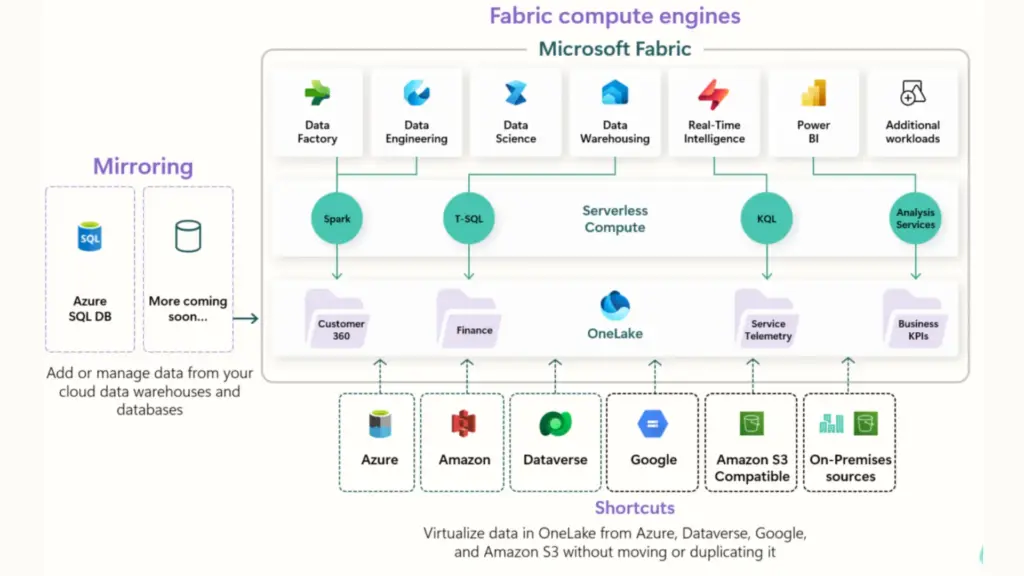
Microsoft Fabric emerged as a significant evolution in Microsoft’s data and analytics offerings. It’s not just a new product; it’s a complete, end-to-end, unified analytics platform designed to bring together data warehousing, data engineering, data science, real-time analytics, and business intelligence into a single, seamless experience. The core idea behind Fabric is to eliminate the silos that often plague data environments. It leverages a shared data lakehouse architecture called OneLake, which acts as a single source of truth for all data.
Fabric’s strength lies in its deep integration with the broader Microsoft ecosystem. For organizations already heavily invested in Power Platform, Azure, and Microsoft 365, Fabric offers a familiar and cohesive environment. It aims to democratize data analytics by making powerful tools accessible to a wider range of users, from business analysts to data scientists. The platform’s design emphasizes simplicity, collaboration, and rapid development, aiming to accelerate time-to-insight. You can learn more about how Fabric is modernizing analytics in our piece on Modernising Analytics Migrating Power Bi To Fabric Lakehouse With Medallion Architecture.
Databricks: The Open, Unified Data Analytics Platform
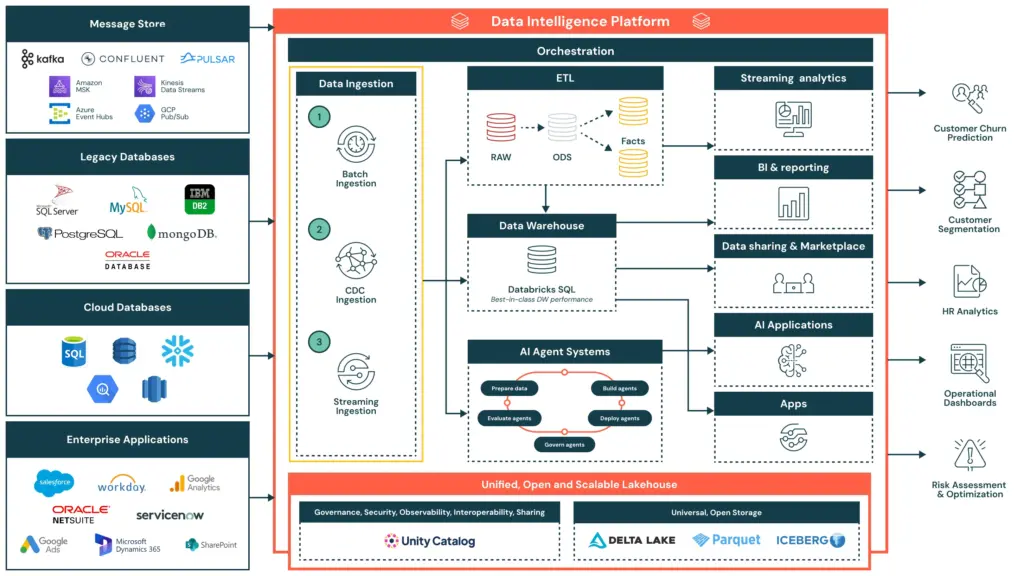
Databricks, founded by the creators of Apache Spark, has long been a leader in big data processing and AI. Its platform is built on an open, unified approach, emphasizing flexibility and choice. Databricks pioneered the concept of the “lakehouse,” a modern data architecture that combines the best aspects of data lakes and data warehouses. This architecture allows for both structured and unstructured data to be stored and processed efficiently, supporting a wide range of workloads from ETL to machine learning.
Databricks champions an open ecosystem, integrating with a vast array of third-party tools and services. This open approach appeals to organizations that prefer not to be locked into a single vendor’s ecosystem and want maximum control over their data stack. Databricks is particularly strong in advanced analytics, machine learning, and AI, providing robust tools for data scientists and ML engineers. Their commitment to open standards and community collaboration has fostered a loyal user base.
Key Features and Capabilities Compared
Let’s break down the critical features and capabilities of each platform:
Data Storage and Management
- Microsoft Fabric: The cornerstone of Fabric is OneLake, a unified data lake built on Azure Data Lake Storage Gen2. It provides a single, logical data repository for all data within Fabric, simplifying data management and governance. Fabric also introduces the concept of “lakehouses” within OneLake, allowing structured data to be managed with ACID transactions, similar to a data warehouse. This hybrid approach aims to bridge the gap between data lakes and data warehouses.
- Databricks: Databricks utilizes Delta Lake as its primary storage layer. Delta Lake is an open-source storage layer that brings ACID transactions, schema enforcement, and time travel capabilities to data lakes. It sits on top of cloud object storage (like AWS S3, Azure Data Lake Storage, or Google Cloud Storage), offering a flexible and scalable solution. Databricks also offers a managed data warehouse experience, allowing organizations to run SQL analytics directly on their lakehouse.
Data Engineering and Transformation
- Microsoft Fabric: Fabric offers a suite of tools for data engineering, including Data Factory pipelines for ETL/ELT, Spark-based data engineering experiences (using notebooks and Spark DataFrames), and SQL analytics for data warehousing. The integration within the platform aims to streamline the entire data pipeline development process.
- Databricks: Databricks excels in data engineering with its powerful Spark engine. It provides robust notebook experiences for writing code in Python, Scala, SQL, and R. Its Delta Live Tables feature simplifies building reliable data pipelines, and its SQL Analytics endpoint allows for high-performance SQL queries on the lakehouse.
Data Science and Machine Learning
- Microsoft Fabric: Fabric integrates machine learning capabilities through its Synapse Data Science experience, leveraging notebooks and ML runtimes. It supports popular ML libraries and frameworks, and its integration with Azure Machine Learning provides advanced ML lifecycle management.
- Databricks: Databricks is a powerhouse for data science and machine learning. Its platform is purpose-built for these workloads, offering features like MLflow for managing the ML lifecycle, managed ML runtimes, and a collaborative environment for data scientists. Its ability to handle large-scale model training and deployment is a key differentiator. For those looking to enhance their AI strategy, exploring Ai Leadership Strategy Microsoft Synapx can provide valuable insights.
Business Intelligence and Reporting
- Microsoft Fabric: This is where Fabric shines brightly for many organizations. It integrates Power BI directly, offering a seamless experience for creating reports and dashboards from data within Fabric. This tight integration eliminates the need for separate connectors and simplifies the BI workflow. For organizations looking to leverage the Power Platform, understanding the benefits of a Power Platform Center Of Excellence Implementation Power Bi is crucial.
- Databricks: While Databricks offers its own SQL analytics and BI capabilities, it typically integrates with third-party BI tools like Tableau, Power BI, or Qlik for advanced visualization. Databricks provides SQL endpoints that can be queried by these tools, offering flexibility for organizations with existing BI investments.
AI and Copilot Integration
- Microsoft Fabric: Fabric is deeply integrated with Microsoft’s AI capabilities, including Microsoft Copilot. This allows users to leverage AI assistance for tasks such as writing code, generating insights, and automating data preparation. The vision is to make data analytics more accessible and efficient through AI. The advancements in this area are further explored in Ai Microsoft Copilot Studio The Future Of Work.
- Databricks: Databricks also offers robust AI and ML capabilities, including its own AI-powered features and integrations with various ML frameworks and MLOps tools. While it may not have the same level of native integration with a broad productivity suite like Microsoft 365, its focus remains on providing cutting-edge AI development tools.
Architectural Differences: A Deeper Dive
The architectural choices made by Microsoft Fabric and Databricks have significant implications for performance, scalability, and management.
Microsoft Fabric: The SaaS-first, Integrated Approach
Fabric is presented as a Software-as-a-Service (SaaS) offering, meaning Microsoft manages the underlying infrastructure. This simplifies deployment and management, allowing organizations to focus on data and insights rather than infrastructure. OneLake, as the central data storage, provides a unified view across different data experiences within Fabric. The platform is built on Azure, leveraging its robust cloud services. Its composable nature allows users to pick and choose the components they need, though the overall experience is geared towards a cohesive, Microsoft-centric ecosystem.
Databricks: The Open, Cloud-Agnostic Lakehouse
Databricks is fundamentally a cloud-agnostic platform, meaning it can run on Azure, AWS, or Google Cloud. This offers organisations greater flexibility and avoids vendor lock-in for their cloud infrastructure. Databricks’ architecture is built around the lakehouse paradigm, with Delta Lake at its core. While Databricks manages the compute and services, the data typically resides in the customer’s own cloud storage account, giving them direct control over their data. This open approach allows for extensive customisation and integration with a wide range of tools.
Pricing Models: What to Expect
Understanding the pricing models is crucial for budgeting and cost optimization.
Microsoft Fabric
Fabric utilizes a capacity-based consumption model. You purchase “Fabric capacity units” (CUs) that are shared across all workloads (Data Engineering, Data Warehousing, Real-Time Analytics, etc.). This simplifies pricing but requires careful monitoring of usage to avoid unexpected costs. Power BI Premium capacity is also a factor for advanced BI features. The exact pricing can be complex and is subject to change, but the underlying principle is paying for the processing power and resources consumed.
Databricks
Databricks pricing is typically based on “Databricks Units” (DBUs), which are a normalized measure of processing capability per hour. Different workloads (e.g., data engineering, SQL analytics, machine learning) consume DBUs at different rates. Pricing also depends on the cloud provider (AWS, Azure, GCP) and the chosen instance types. Databricks offers various tiers, including Standard, Premium, and Enterprise, with different feature sets and support levels.
Integration and Ecosystem
The ability of a platform to integrate with existing tools and services is paramount.
Microsoft Fabric
Fabric’s biggest integration advantage is its deep connection to the Microsoft ecosystem. This includes seamless integration with Power BI, Azure services (like Azure Active Directory, Azure Synapse Analytics, Azure Machine Learning), and even Microsoft 365 applications. For organizations heavily invested in Microsoft technologies, this provides a highly streamlined and cohesive experience. The platform also offers connectors to various external data sources.
Databricks
Databricks prides itself on its open ecosystem. It integrates with a vast array of data sources, BI tools, ETL/ELT tools, and MLOps platforms. This flexibility allows organizations to build custom data stacks tailored to their specific needs. While it may require more configuration than Fabric’s native integrations, the breadth of choice is a significant advantage for those seeking best-of-breed solutions.
Which Platform is Better in 2026?
The “better” platform in 2026 isn’t a simple declaration; it depends entirely on your organization’s context.
Choose Microsoft Fabric If:
- You are heavily invested in the Microsoft ecosystem: If your organization already uses Azure, Power BI, Microsoft 365, and other Microsoft services, Fabric offers unparalleled integration and a familiar user experience.
- You prioritize a unified, end-to-end platform: Fabric’s core value proposition is bringing all data workloads into a single pane of glass, simplifying management and collaboration.
- You want to democratize data analytics: The integrated nature and AI assistance (like Copilot) aim to make advanced analytics more accessible to a broader audience.
- Ease of management and a SaaS model are key: Microsoft handles the infrastructure, reducing your operational overhead.
- Your BI needs are primarily met by Power BI: The native integration with Power BI is a significant advantage.
Choose Databricks If:
- You require cloud flexibility and multi-cloud support: Databricks runs on Azure, AWS, and GCP, offering freedom from vendor lock-in at the cloud infrastructure level.
- You need cutting-edge AI and Machine Learning capabilities: Databricks is a leader in this space, offering advanced tools and frameworks for data scientists and ML engineers.
- You prefer an open ecosystem and extensive customization: Databricks’ open architecture allows for deep integration with a wide range of third-party tools.
- You have complex data engineering and large-scale processing needs: Databricks’ Spark-native engine is exceptionally powerful for big data workloads.
- You want direct control over your data lake infrastructure: Data resides in your cloud storage, giving you granular control.
The Evolving Landscape
Both platforms are continuously evolving. Microsoft Fabric is rapidly maturing, incorporating new features and expanding its capabilities. Databricks is also innovating rapidly, particularly in areas like AI, serverless computing, and data governance.
By 2026, we can expect:
- Increased AI Integration: Both platforms will likely see even deeper integration of AI and machine learning, with tools like Copilot becoming more sophisticated and pervasive.
- Enhanced Lakehouse Capabilities: The lakehouse architecture will continue to be a central theme, with both platforms refining their offerings for unified data management.
- Focus on Governance and Security: As data volumes grow, robust governance, security, and compliance features will become even more critical.
- Hybrid and Multi-Cloud Strategies: While Fabric is Azure-centric, Microsoft is increasingly supporting hybrid scenarios. Databricks will continue to emphasize its multi-cloud capabilities.
Ultimately, the decision between Microsoft Fabric and Databricks in 2026 will hinge on a thorough assessment of your organization’s existing technology stack, technical expertise, strategic priorities, and budget. It’s not about which platform is universally “better,” but which platform is the right fit for your unique data journey. Organizations often find value in exploring how these platforms can complement each other or fit into a broader data strategy. For instance, understanding the principles behind Microsoft Fabric can help inform this decision.
Key Takeaways
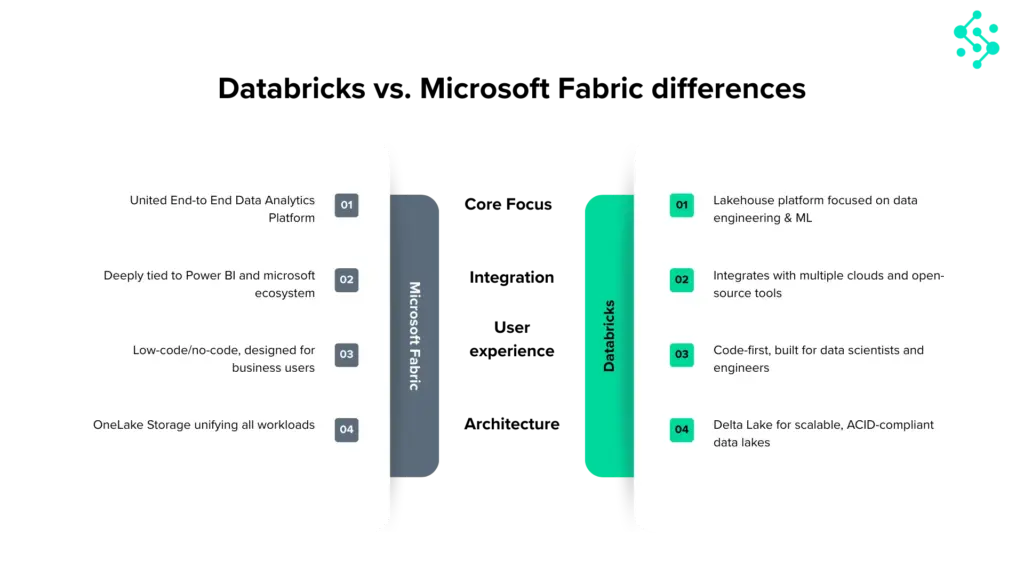
- Microsoft Fabric: A unified, end-to-end analytics platform deeply integrated with the Microsoft ecosystem, ideal for organizations prioritizing simplicity, collaboration, and Power BI integration.
- Databricks: An open, cloud-agnostic lakehouse platform excelling in AI/ML, advanced data engineering, and offering maximum flexibility for complex data architectures.
- Architecture: Fabric is SaaS-first and Azure-centric with OneLake; Databricks is cloud-agnostic, built on Delta Lake, and runs on your cloud infrastructure.
- Use Cases: Fabric is strong for democratizing analytics and seamless BI. Databricks is a leader for cutting-edge AI/ML and large-scale data processing.
- Future Trends: Expect deeper AI integration, enhanced lakehouse capabilities, and a continued focus on governance from both platforms.
- Decision Factor: The best choice depends on your organization’s existing tech stack, strategic goals, and need for flexibility vs. integration.
Not sure which platform is right for your business?
Synapx helps organisations evaluate, design, and implement the right data platform using Microsoft Fabric, Power Platform, and modern AI solutions.
Get a tailored recommendation based on your current setup, goals, and data maturity, contact us today!